How I Helped a Local Business Achieve the #1 Ranking on Google Maps – Siddique Akbor Emon
Client Information
Client Type: Service-Based Business
Industry: Local Service Business
Project Duration: 4 Months
Services Provided: Google Business Profile SEO, Local Keyword Research, On-Page SEO, Citation Building, Local Content, Review Strategy & Local Authority Building
Project Overview
For local service businesses, appearing prominently on Google Maps can have a direct impact on how easily potential customers discover and contact the business.
In this project, I worked with a local business that was struggling to achieve strong visibility for its key service-related searches, while competitors were consistently ranking ahead.
My objective was to improve the business’s Google Maps visibility, strengthen its local relevance, and achieve higher rankings in local search.
I implemented a focused Google Maps SEO strategy covering Google Business Profile optimisation, local keyword research, on-page SEO, citations, reviews, content, and local authority.
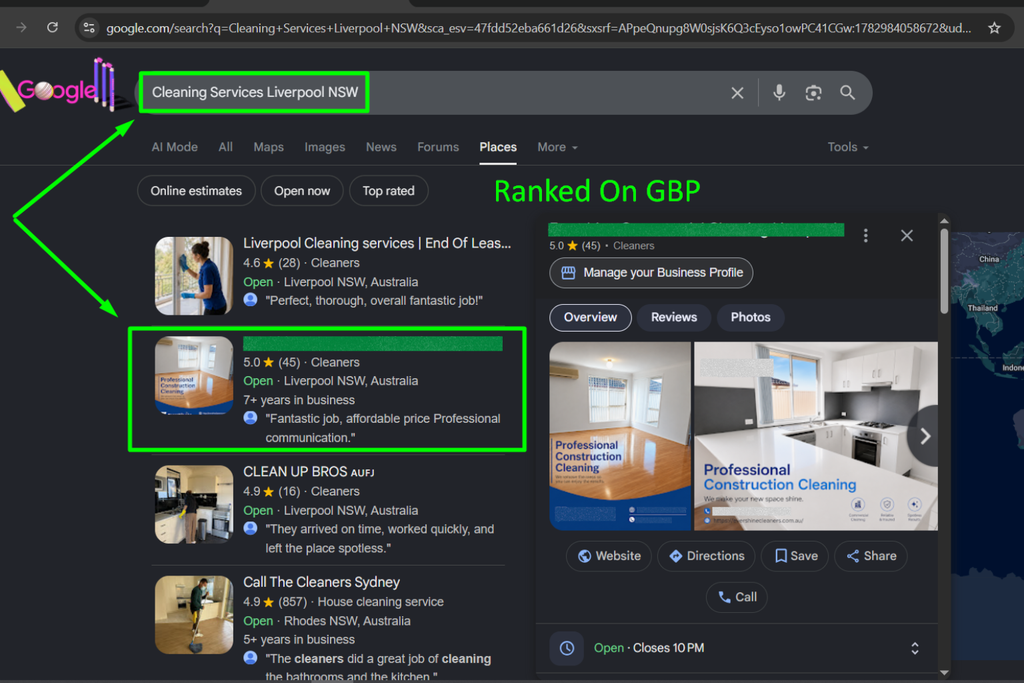
As a result, the business achieved the #1 position on Google Maps for a targeted local search, along with increased profile interactions, calls, and website clicks.
Results
The campaign achieved its primary objective:
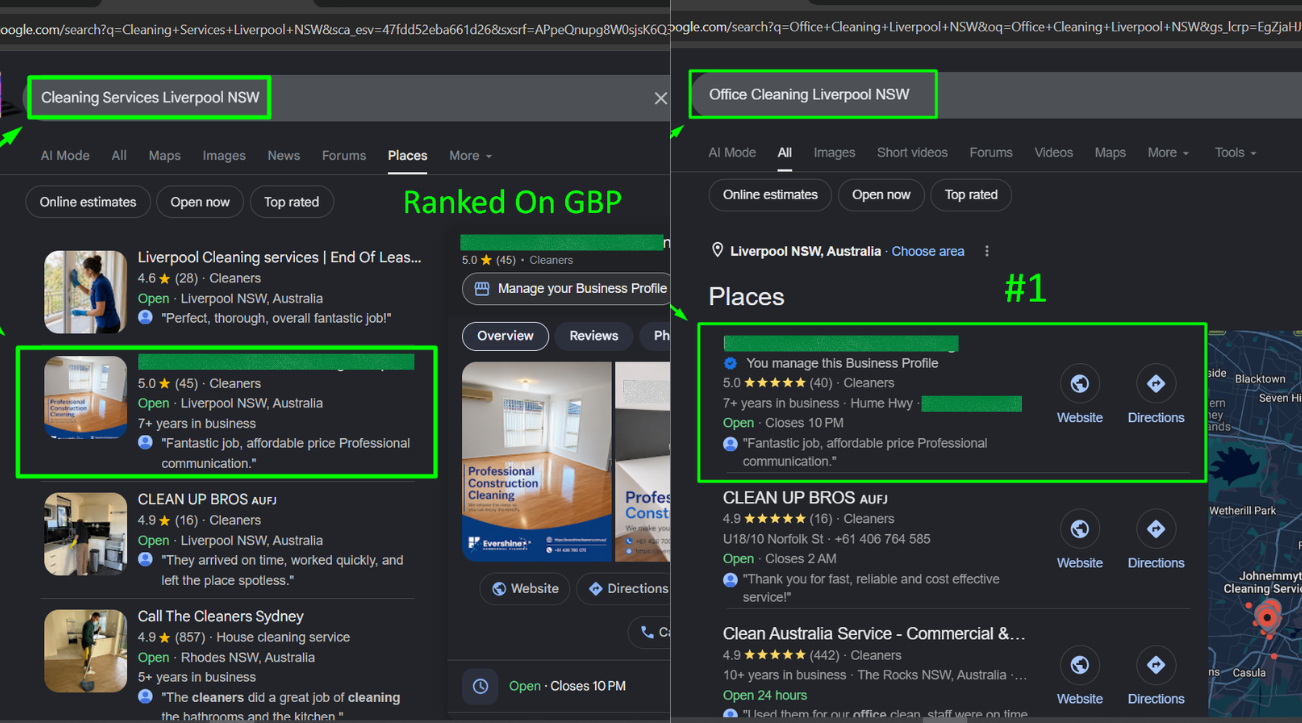
#1 Google Maps Ranking
The business successfully reached the #1 position on Google Maps for the targeted local search.
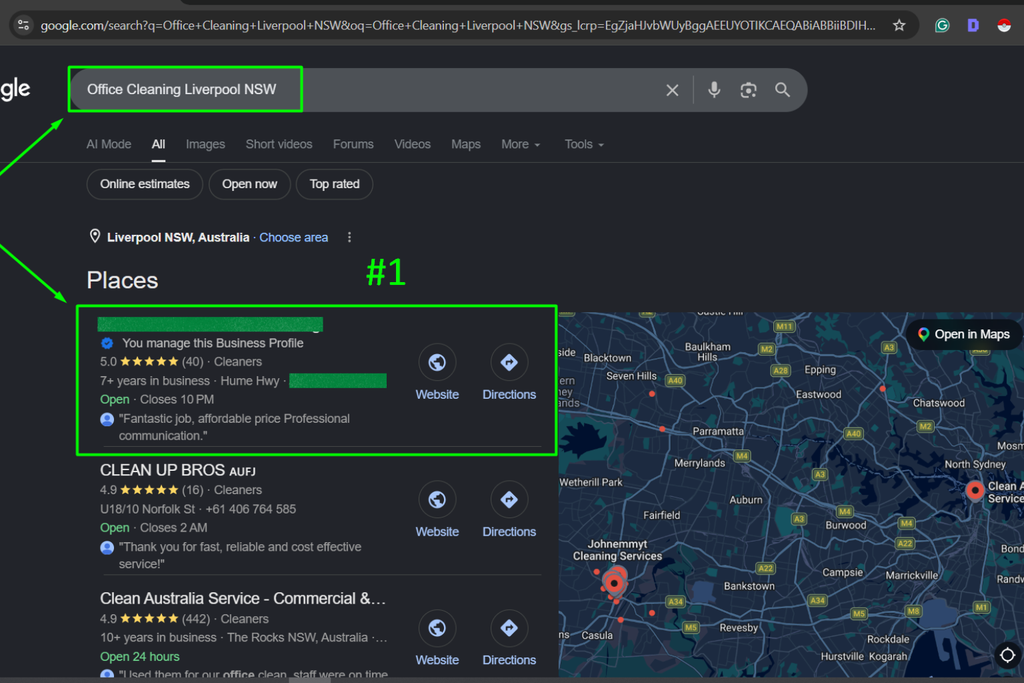
This was a significant improvement in local search visibility, helping the business appear more prominently when potential customers searched for its services in the target area.
More importantly, the improvement in Google Maps visibility translated into measurable actions from potential customers, including calls, website visits, and overall Business Profile interactions.
Key Results
- #1 Google Maps Ranking for the targeted local search
- 54.7% increase in Business Profile interactions year over year
- 170.0% increase in calls year over year
- 111.8% increase in website clicks year over year
- Stronger local visibility and customer engagement
- More opportunities to convert local searches into enquiries and customers
The Challenge
The business had a good service offering, but its online presence was not generating the level of local visibility needed to compete effectively.
1. The Business Was Not Ranking #1 on Google Maps
The primary problem was visibility.
When potential customers searched for the business’s core service in the target area, competitors were appearing above the client in Google Maps.
This meant competitors had a greater opportunity to receive website visits, phone calls, enquiries, and customers.
2. Weak Local Relevance
The existing Google Business Profile and website were not sending sufficiently strong signals about the business’s services and geographic relevance.
Google needs to understand the relationship between a business, its services, and the locations it serves.
Without strong local relevance, even a legitimate and established business can struggle to compete in the local results.
3. Limited Local Keyword Visibility
The business was not consistently ranking well for important service-based local keywords.
This limited its exposure to people actively searching for the services it provided.
The challenge was therefore not simply to rank for the business name, but to improve visibility for commercial searches that could generate customers.
4. Competitors Had Stronger Local Signals
Competitors had established stronger local search signals through factors such as:
- Google Business Profile optimisation
- Reviews
- Local citations
- Relevant website content
- Local authority
- Stronger keyword relevance
The business needed a more structured strategy to close this competitive gap.
5. Google Maps Was Not Being Used as a Lead-Generation Channel
The Google Business Profile was treated more like a business listing than a strategic search asset.
My approach was to turn it into an important part of the business’s overall local search presence.
Project Goals
Before beginning the campaign, I established several measurable objectives.
Primary Goals
- Achieve a top Google Maps position for the primary target keyword
- Improve Google Business Profile relevance
- Increase visibility for local service searches
- Improve local organic rankings
- Strengthen local authority
- Increase qualified website traffic
- Create more opportunities for calls and enquiries
- Build a sustainable foundation for long-term local search growth
The ultimate goal was simple:
Get the business in front of more local customers at the exact moment they were searching for its services.
My Google Maps SEO Strategy
I didn’t rely on a single optimisation tactic.
Instead, I built a complete local SEO strategy designed to strengthen the signals surrounding the business.
1. Google Business Profile Audit
I started with a detailed review of the business’s Google Business Profile.
I analysed:
- Primary category
- Secondary categories
- Business description
- Services
- Business information
- Photos
- Reviews
- Profile completeness
- Local relevance
- Competitor profiles
Why I Did This
The Google Business Profile is one of the most important assets for a local business competing in Google Maps.
Before making changes, I needed to understand where the profile was under-optimised and where competitors had an advantage.
2. Google Business Profile Optimisation
After the audit, I optimised the profile around the business’s core services and target market.
This included improving relevant profile elements such as:
- Primary category selection
- Secondary categories
- Services
- Business description
- Photos
- Profile information
- Relevant updates and posts
The optimisation was designed to make the business’s offering and local relevance clearer.
Why I Did This
A well-optimised profile helps Google better understand what the business does and which searches it should be considered for.
It also improves the information potential customers see when they discover the business.
3. Local Keyword Research
I conducted keyword research to identify the searches that mattered most to the business.
Rather than targeting keywords solely based on search volume, I prioritised terms based on:
- Commercial intent
- Local relevance
- Service relevance
- Competition
- Customer search behaviour
The strategy focused on combinations such as:
Service + City
Service + Suburb
Service + Near Me
Best Service + Location
Why I Did This
The goal wasn’t simply to increase rankings.
I wanted to make sure the business was visible for searches performed by people who were genuinely looking for its services.
4. Competitor Analysis
I analysed the businesses already ranking strongly in Google Maps.
I reviewed areas such as:
- Categories
- Reviews
- Website optimisation
- Services
- Content
- Citations
- Local authority
- Search visibility
- Profile completeness
Why I Did This
The businesses ranking at the top of Google Maps provided valuable insight into the competitive landscape.
Instead of guessing what the market required, I identified the areas where the client needed to become more competitive.
5. Website Local SEO Optimisation
I also optimised the website supporting the Google Business Profile.
This included improvements to:
- Title tags
- Meta descriptions
- Headings
- Service pages
- Location relevance
- Internal linking
- Content structure
- Calls to action
- Local keyword targeting
Why I Did This
Google Maps SEO shouldn’t operate separately from website SEO.
The website provides additional context about the business, its services, expertise, and service areas.
A stronger website can therefore support the overall local search strategy.
6. Service & Location Content
I strengthened the website’s content around the services and locations most relevant to the campaign.
Rather than creating pages simply to insert keywords, the content was structured around genuine customer needs.
Content covered areas such as:
- Services
- Service areas
- Local customer problems
- Frequently asked questions
- Benefits
- Trust signals
- Conversion opportunities
Why I Did This
High-quality local content gives search engines additional context while helping potential customers understand why the business is relevant to them.
7. Local Citation Building
I worked on strengthening the business’s presence across relevant online directories and local business platforms.
The focus was on:
- Accurate business information
- Consistent NAP details
- Relevant directories
- Industry-specific listings
- Local citations
Why I Did This
Consistent local business information helps reinforce the connection between the business, its services, and its geographic market.
I focused on quality and relevance rather than building large numbers of low-quality listings.
8. Review Strategy
Reviews were another important part of the campaign.
I focused on building a stronger and more consistent review profile through genuine customer feedback.
The strategy included:
- Encouraging authentic customer reviews
- Maintaining review consistency
- Responding professionally
- Strengthening reputation signals
Why I Did This
Reviews can influence both customer trust and local search competitiveness.
When someone sees the business in Google Maps, its reviews can play an important role in whether that person chooses to click, call, or visit the website.
9. Local Authority Building
I worked on improving the business’s overall local authority through relevant mentions, citations, content, and authority-building activities.
The focus was on creating genuine signals of relevance rather than relying on artificial tactics.
Why I Did This
A business competing in a competitive local market needs more than an optimised profile.
It needs supporting signals that establish it as a credible and relevant business within its market.
10. Ongoing Ranking Monitoring
After implementing the optimisation strategy, I continuously monitored the campaign’s performance.
I tracked:
- Google Maps rankings
- Target keywords
- Local visibility
- Organic rankings
- Search impressions
- Organic clicks
- Google Business Profile performance
- Website traffic
- Lead opportunities
This allowed me to identify what was working and refine the strategy as the campaign progressed.
Business Impact
Achieving the #1 Google Maps position was more than a ranking improvement. It gave the business a stronger opportunity to reach potential customers actively searching for its services.
Greater Local Visibility
The business gained stronger visibility in local search, making it easier for potential customers to discover it ahead of competitors.
Stronger Local Authority
The campaign strengthened the business’s local presence through Google Business Profile optimisation, website improvements, citations, reviews, and relevant content.
More Qualified Traffic
The strategy focused on commercial local searches, helping the business attract potential customers who were actively looking for its services.
Greater Lead Potential
Higher Google Maps visibility created more opportunities for customers to:
- Call the business
- Visit the website
- Request a quote
- Make an enquiry
- Become a customer
Long-Term Growth
The campaign built a stronger foundation for sustainable local visibility and continued growth through improved rankings, local relevance, authority, and customer engagement.
Client Testimonial
“Siddique helped us improve our local visibility through professional Google Business Profile optimisation and Local SEO. Our Google Maps rankings improved, and we started receiving more calls from local customers. His strategy was focused, practical, and helped us build a stronger online presence for consistent local growth.”
— Moussa Diab (Owner) | Google Maps SEO
“Working with Siddique made a real difference to our local visibility. He improved our Google Business Profile and overall Local SEO, helping us achieve stronger Google Maps rankings and attract more attention from customers searching for gutter and roofing services. His work was professional, focused, and results-driven.”
— Ali Diab (Owner) | Google Business Profile Optimisation
Conclusion
This campaign demonstrates that achieving a #1 Google Maps ranking requires more than simply adding keywords to a Google Business Profile.
The success came from combining multiple areas of Local SEO into one structured strategy.
I strengthened the business’s Google Business Profile, local keyword targeting, website relevance, service content, citations, reviews, local authority, and overall search presence.
The result was a move to the #1 Google Maps position for the targeted local search, giving the business a stronger opportunity to be discovered by customers actively searching for its services.
For local service businesses, Google Maps SEO can be one of the most valuable channels for generating visibility, trust, calls, enquiries, and new customers.
If your business isn’t getting the visibility it deserves in Google Maps, I can help you build a Local SEO strategy focused on higher rankings, stronger local visibility, and more qualified leads.